
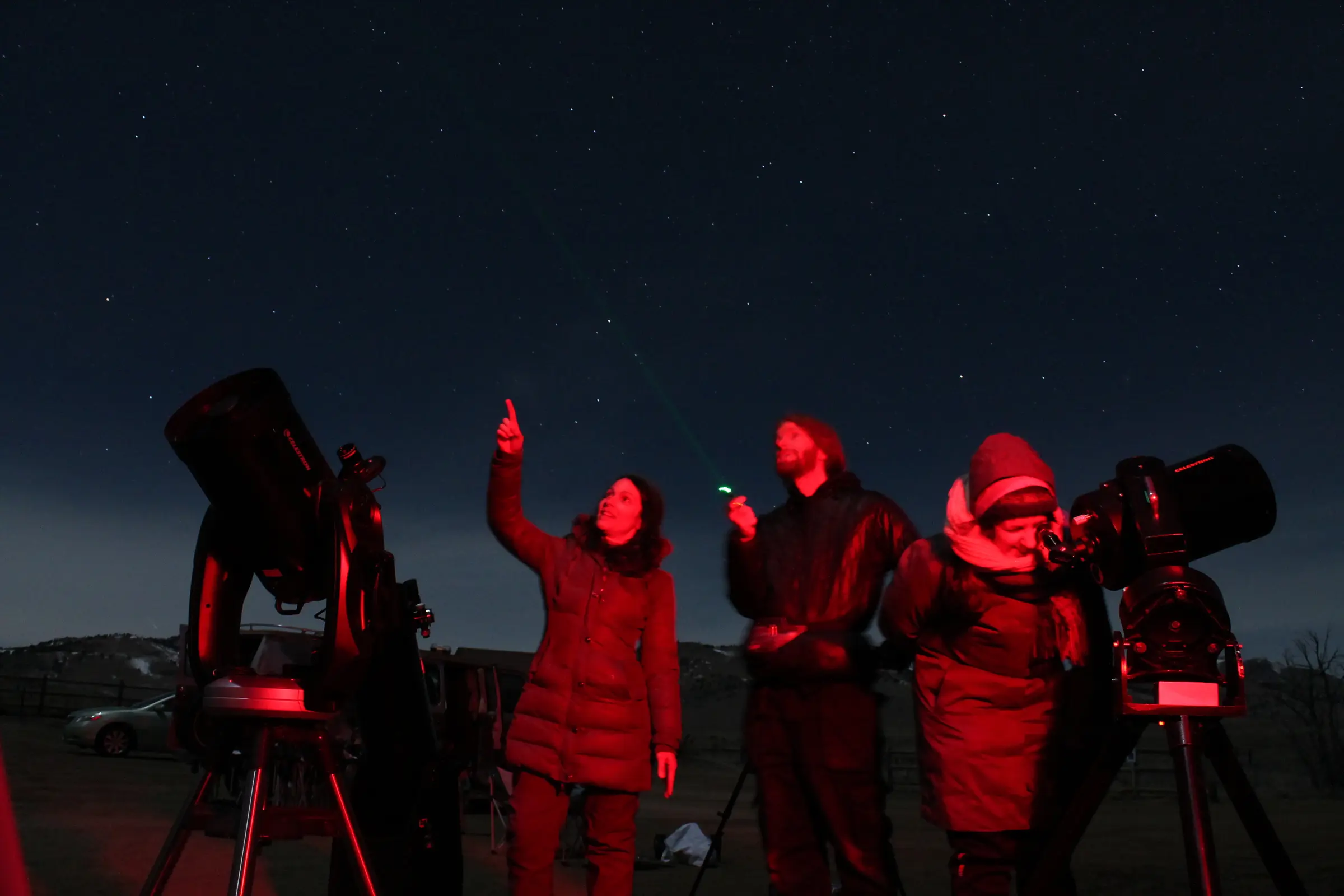
People saying they are interested in the night sky is useful. People changing where they travel, staying overnight, buying guided activities and spending money around a night-sky experience is stronger evidence. That distinction matters for destinations considering astrotourism. A survey can show that an idea deserves to be tested. Observed behavior begins to show what the idea can become once it enters a real tourism economy.
Start with the difference between interest and behavior
Global traveler research gives astrotourism a credible starting point. Booking.com's survey of 27,713 travelers across 33 countries and territories found that 62 percent would consider a darker-sky destination. Tourism Western Australia's research likewise found substantial interest among its identified target markets.
Those results matter, but they answer a limited question: does the concept appeal to travelers?
They do not tell a resort how many guests will book on a Tuesday night, what a tour should cost, whether visitors will extend a stay, or how much of the resulting spending will stay in the local economy.
For those questions, observed travel behavior is more useful.
Norway shows what a mature astronomy-led tourism market can look like
Northern Lights tourism in Norway is one of the clearest examples because it is recurring, measurable and embedded in a functioning winter tourism economy rather than tied to one exceptional celestial event.
Innovation Norway's 2025 tourism research compared 1,043 foreign Northern Lights tourists with 3,872 foreign winter tourists. Northern Lights tourists averaged NOK 2,780 in daily spending. They were also highly active travelers: 66 percent participated in organized or guided outdoor activities, and a large share visited more than one Norwegian region.
The wider trend matters too. Paid foreign guest nights in Northern Norway during the aurora season were reported at more than double their 2019 level.
None of that means an aurora tour itself earns NOK 2,780 per guest per day. The spending figure covers the visitor's trip. That is precisely why it is commercially interesting. Astronomy can sit inside a wider visitor economy involving lodging, food, transportation, guiding and other experiences.
The tourism value does not have to be captured entirely at the telescope.
Park visitors are already using the night as recreation time
The U.S. National Park Service and Utah State University studied evening visitors at four Utah state parks and five National Park Service units. More than 700 surveys were collected.
The research found that 61.8 percent of surveyed evening visitors participated in night-sky recreation, including activities such as astronomy viewing, night photography and nighttime wildlife observation. Night-sky recreationists also tended to take longer overnight trips than other recreationists.
This is important for a different reason than Norway.
These people were not necessarily traveling on a dedicated astronomy vacation. Many were already visiting the parks. The night sky became an additional part of the trip once they were there.
That is often the more relevant model for a resort, lodge, campground or destination. A successful astronomy program does not always have to convince someone to cross a continent solely for the stars. It can make an existing trip richer and give the visitor another reason to remain engaged after sunset.
Jasper shows that a night-sky event can become a multi-day destination experience
Research on Alberta's Jasper Dark Sky Festival found visitors traveled an average of about 430 kilometres to attend. Most respondents were first-time visitors, most stayed two days or longer and most attended more than five festival events.
That changes the commercial frame again.
The product is not simply a two-hour observing session. The dark sky becomes an anchor around which a destination can build a program of talks, guided experiences, food, community activity and other events.
For destinations with weak shoulder seasons, this is particularly relevant. Astronomy has one unusual structural advantage: much of the product naturally happens during hours when conventional daytime attractions are closed or winding down.
A destination does not necessarily have to replace an existing activity to add astronomy. It can create new inventory in a part of the day that was previously difficult to program.
The Canary Islands show astronomy operating at destination scale
The Canary Islands provide another useful kind of evidence because astronomy is already integrated into a mature tourism economy.
In 2026, researchers at the University of La Laguna reported, using Canary Islands tourism statistics, that approximately 4.3 percent of visitors participate in an astronomy-related activity. They translated that into roughly 600,000 participants per year. On La Palma, the reported participation rate rises to around 17 percent.
The islands also support roughly 60 businesses specializing in astrotourism.
This is not a willingness-to-pay survey. It is an estimate of participation within an existing destination economy.
It also demonstrates that astrotourism does not have to remain a tiny specialist category. In a destination with the right sky, infrastructure, reputation and product network, astronomy can become one recognized part of what visitors actually do.
Eclipses show the upper limit of astronomy as a travel trigger
Total solar eclipses are different from ordinary stargazing, and they should be treated that way. They are rare, time-specific events with unusually concentrated demand.
But they demonstrate something useful: astronomy can be powerful enough to change travel plans at large scale.
Maine's tourism analysis of the April 2024 eclipse found statewide visitor spending increased by about 23.4 percent during the eclipse period. Hotel occupancy was 47 percent higher and short-term-rental occupancy 27 percent higher than in 2023. The state explicitly viewed the event as an opportunity to attract visitors during a traditionally slower period.
Those results should never be presented as a forecast for a weekly astronomy tour. They are evidence of the mechanism, not the expected magnitude.
A compelling celestial experience can influence where people go, when they go and whether they stay overnight.
The recurring pattern matters more than any one statistic
Norway measures a dedicated aurora segment. Utah measures evening park recreation. Jasper measures festival behavior. The Canary Islands measure participation in a mature destination. Eclipse studies measure exceptional event-driven travel.
They are not interchangeable datasets, and adding them together would produce a meaningless market-size estimate.
What matters is that different research methods in different places repeatedly reveal the same underlying behaviors.
People travel for astronomical phenomena. They participate in night-sky activities while already on vacation. They stay overnight around astronomy events. They purchase guided experiences. They combine astronomy with lodging, food, transportation, nature and culture.
That is a stronger foundation for destination development than a single global market forecast.
What this means for a resort, lodge or destination
The practical question is not whether everyone will travel specifically for astronomy. They will not.
The more useful questions are whether the night sky can strengthen the trip the destination already offers, whether it can create a reason to stay active after dinner, whether it can produce a shoulder-season event, whether it can differentiate accommodation, and whether a guided experience can convert existing interest into something visitors actually book.
That is why the right first step is usually a pilot rather than a permanent observatory.
Build a clear experience. Put it into the same booking and communication channels guests already use. Track inquiries, conversion, attendance, satisfaction, weather outcomes and operational cost. Where possible, also measure whether participants dine on property, extend their stay, book other activities or return.
The global surveys tell us people like the idea. The destination studies tell us people can act on it.
The final question belongs to the destination itself: what happens when the night sky becomes something guests can actually experience?
What another destination can use
Four transferable lessons
- 01Use stated-interest research to justify testing, then look for observed travel behavior to strengthen the business case.
- 02Design astronomy as part of a wider trip involving accommodation, food, guiding, landscape and other activities.
- 03Treat night programming as potential destination inventory, not just telescope access.
- 04Measure conversion, length of stay, guest spend and repeatability locally before forecasting return on investment.
Evidence and public record
Follow the sources
The studies in this article measure different forms of behavior and should not be combined into one market-size estimate. Norway measures a recurring aurora-tourism segment. Utah measures evening park visitors. Jasper measures festival visitors. Canary Islands figures cover astronomy-related participation in an established tourism economy. Eclipse cases demonstrate exceptional event-driven travel rather than ordinary weekly stargazing demand.
National tourism research comparing foreign Northern Lights tourists with other foreign winter tourists, including spending and trip behavior
Night-sky recreation research using more than 700 surveys across nine Utah state and national park units
Peer-reviewed study of travel distance, overnight stays, participation and visitor outcomes at the Alberta festival
2026 university analysis citing Canary Islands tourism statistics on astronomy participation and astrotourism businesses
State analysis of visitor spending and accommodation occupancy during the April 2024 total solar eclipse period
The wider business case, supporting regional studies and limitations on interpreting astrotourism data